

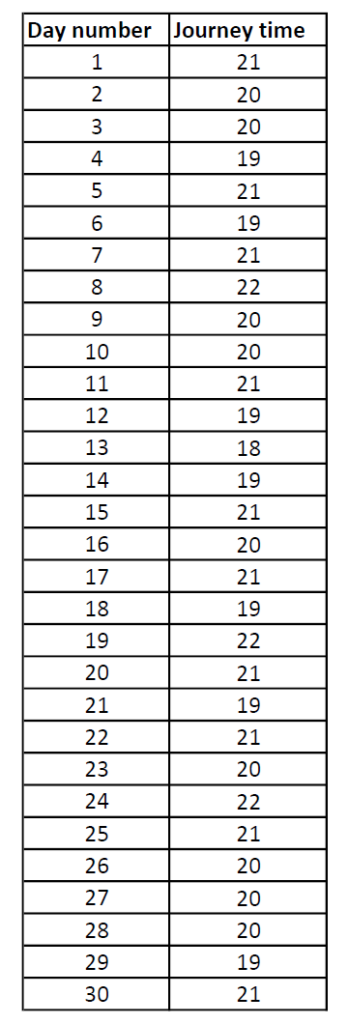
You plot a histogram
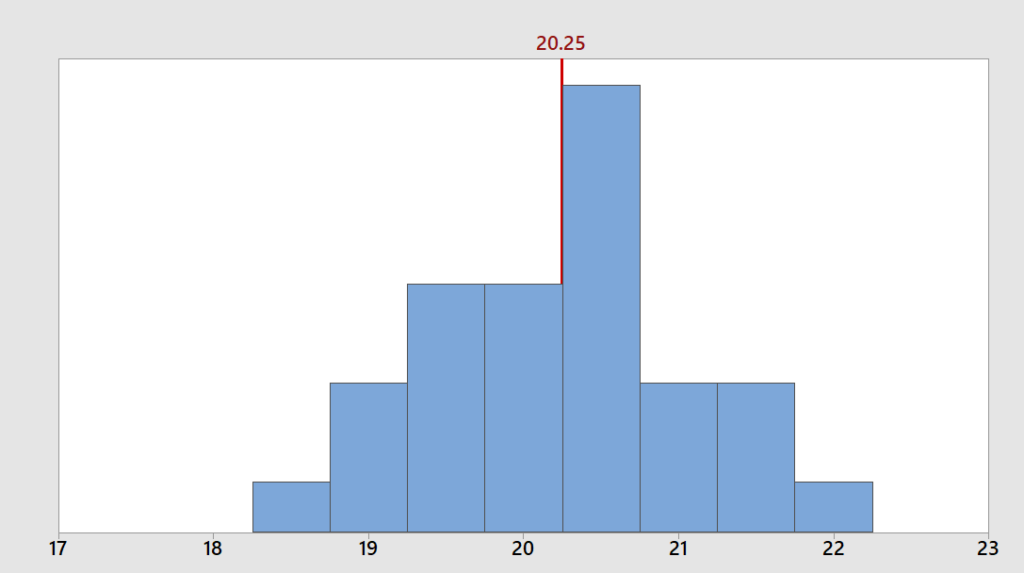
You can see on the histogram that on average, your journey will take 20.25 minutes. The quickest journey takes about 18 minutes, and the longest takes 22.
Why did Day 13 take 18 minutes while Day 24 took 22 minutes?
- You caught a few extra green lights.
- A delivery truck was moving slowly ahead of you.
- It was drizzling, so local traffic slowed down slightly.
They are the everyday, built-in variables of driving your specific route.
If you look at your 30-day commute log, your journey never takes exactly 20.25 minutes. Sometimes it takes 18 minutes; sometimes it takes 22.
This natural, everyday fluctuation is Common Cause Variation. It is the routine “noise” built into your current process.
If your commute takes 22 minutes on a Tuesday, and you spend an hour aggressively trying to figure out “what went wrong,” you are wasting your time. You cannot explain or eliminate routine noise.
If you want to consistently drop your commute to 15 minutes, you cannot just grip the steering wheel tighter and demand better results. You have to fundamentally change the system—like finding a completely new route, taking the highway instead of backroads, or switching to the train.
When you transition from the driving analogy to the actual production floor, the concept of “routine noise” remains exactly the same. Even when a factory is running perfectly, no two products will ever be identical down to the microscopic level.